
Read the latest issue of Dairy Market Drivers, a bi-weekly report from IDFA partner Ever.Ag. Dairy Market Drivers features spotlight data, key policy updates, and a one-minute video that covers timely topics for the dairy industry.
Dairy Market Drivers: GLP-1 Drug Impacts on Eating Habits; Tax Refunds and Consumer Spending; and Global Milk Output in a Minute!
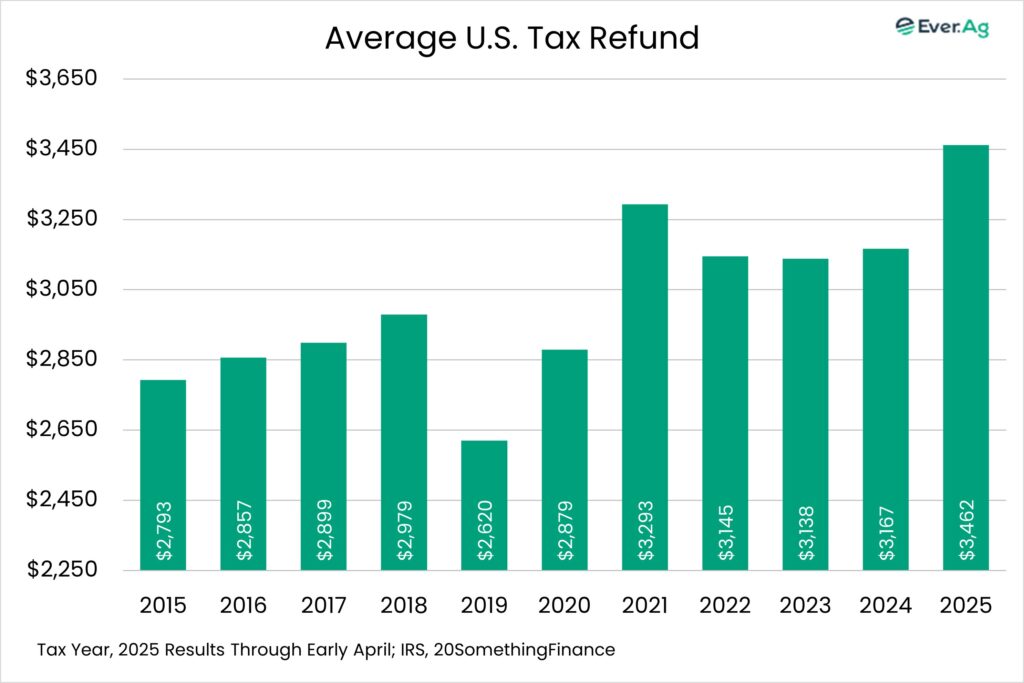
Quick Bites: Higher Tax Refunds May Boost Spending
- Americans are receiving bigger tax refunds this year. Preliminary data shows an average tax refund of $3,462, up 9% from the final 2025 average refund. This puts more cash in consumers’ pockets.
- Only a portion of those refund dollars will flow into discretionary spending. NRF survey data show 41% of consumers plan to spend their refunds on necessities. A portion of that will likely go toward paying for more expensive gas. But some of those dollars should also make their way to grocery spending and the dairy aisle.
- Savings are the top destination for this year’s tax refunds. About 44% of consumers plan to put a portion of their refund into savings.
- Consumers are also looking to pay down some debt. Around 35% of survey participants plan to put some of their refund toward debt, reducing discretionary spending potential.
- Bigger tax refunds put more money in consumers’ wallets – at least temporarily. March retail sales data showed increased spending for the sixth month in a row, with total sales up 1.7% from February. Grocery store spending edged up 0.9% versus February, and food services sales rose 0.1% month-over-month. While people spent a little more on food, gasoline station purchases made a bigger leap, rising 15.5% compared to February and +18.1% from last year.
Today’s Special
- We’re hearing a lot about the changing eating habits of people on GLP-1 weight loss medication. Yes, these folks are eating less – but they’re not the only ones. The diet adjustments associated with GLP-1 use also mirror the changing preferences of Gen Z consumers.
- More and more young adults are looking for food with higher protein, more fiber and greater nutrient density. They also want smaller meals, especially when they dine out. A survey by the Acosta Group found that younger restaurant goers are more mindful about what they order when eating out, and 42% said they are sharing entrees.
- That matches what GLP-1 users are looking for at restaurants. William Blair Equity Research released survey data from 300 GLP-1 users, and about 70% reported eating smaller portions at restaurants. Nearly half (48%) said they would go to restaurants more often if smaller portions were offered. This sentiment was especially true among consumers under the age of 45.
- Consumers in general say they are eating out less often, but it’s not the same for all age groups. The Acosta group research found that overall, 34% of consumers are dining out less frequently. But 48% of Gen Z and Millennial diners are actually eating out more often, underscoring the importance of catering restaurant meals to their wants and needs.
- Restaurants are already responding with smaller portions, more small-plate options and meals that boast more protein and fiber. They are finding creative ways to incorporate dairy and other protein-dense foods into menu offerings. By embracing these consumer trends now, restaurants will be in a good position to appeal to more health-conscious consumers in the future.