
Read the latest issue of Dairy Market Drivers, a bi-weekly report from IDFA partner Ever.Ag. Dairy Market Drivers features spotlight data, key policy updates, and a one-minute video that covers timely topics for the dairy industry.
Dairy Market Drivers: Weather Impacts on Milk and Fat Production; Declining SNAP Participation; and the American Consumer in a Minute!
Quick Bites: Fuel Costs Driving Consumer Behavior
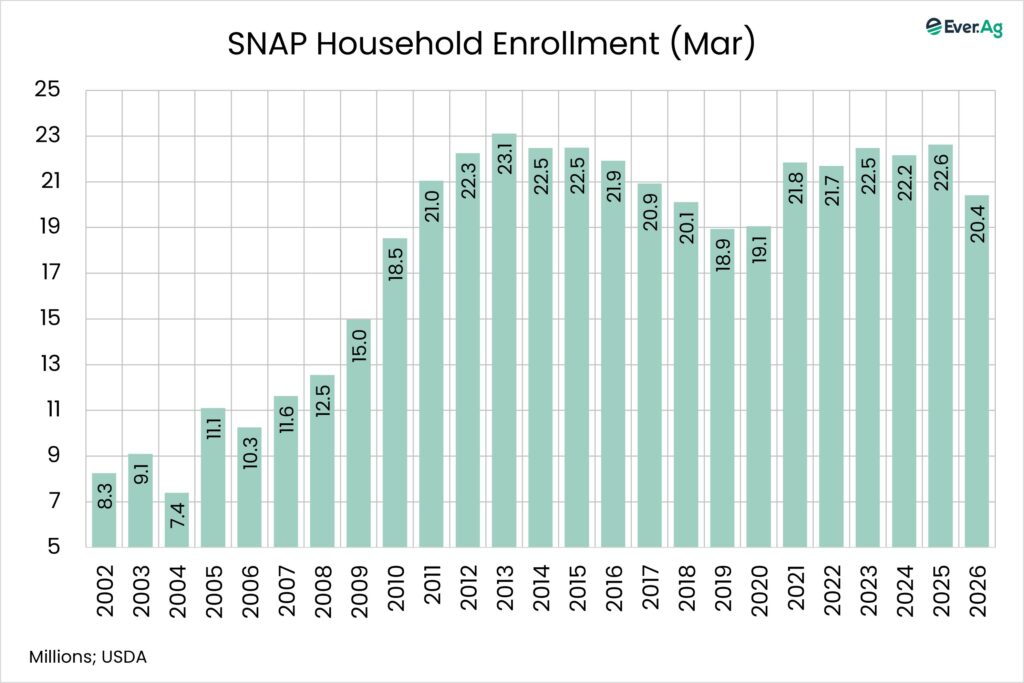
- Declining participation in the Supplemental Nutrition Assistance Program (SNAP) creates another headwind for food demand.
- USDA reported 20.3 million households enrolled in March, down 10% from a year earlier. That was the lowest enrollment level since March 2020 as new eligibility stipulations, work requirements, and state administrative cost-share provisions contributed to reduced enrollments.
- Total benefits are shrinking alongside enrollment. Average monthly SNAP benefits held relatively steady at $347 per household, down just 1% from last year. But with 2.3 million fewer households participating, total benefits paid were roughly $880 million lower than a year earlier.
- Fewer SNAP dollars in wallets cuts into grocery spending. SNAP benefits accounted for 8.3% of grocery store revenue in March, down from 9.4% a year ago and the smallest share since March 2020. That’s a meaningful shift for retailers, especially those serving value-conscious consumers.
- Milk and other dairy products are some of the important staples purchased with SNAP dollars. But if fewer households are participating in food assistance programs, cash-strapped consumers may have tough choices to make. For dairy, this is a trend worth watching.
Today’s Special
- It’s the time of year when Summer heat becomes a watch factor for U.S. milk production. Dairy cows do best in cool conditions, so when the mercury in the thermometer climbs, heat stress can take a toll on milk output, even in modern dairy systems that prioritize heat abatement.
- A mild start to the Summer has California cows faring better than normal. But field reports from other parts of the country indicate that prolonged hot weather is starting to take a toll on dairies, particularly in the Midwest. Midwest spot milk prices climbed to a midpoint of +$1.50 per hundredweight, up from +$1.00 last week and -$0.50 a year ago, pointing to reduced milk availability.
- The cheese market reacted to this potentially tighter milk supply. A pound of block cheddar climbed 8 cents over the course of last week to $1.63 per pound after a month of relatively stable prices. Four to 30-day-old cheese is what trades at the CME, so less fresh product availability tends to show up in prices.
- Extreme heat is also putting pressure on global milk supplies. Europe has experienced several historic heat waves since May, with France being one of the countries hit hardest. After months of strong year-over-year milk production growth out of the EU, weekly data from early July showed output in France down 3.4% year-over-year, while UK production trailed last year by -5.3%.
- Tremendous milk production growth has been a headlining story for all of 2026. And signs pointed to continued growth in the second half of the year. But now we will watch closely to see how this heat impacts cows in the short term and how well they bounce back in the Fall.