
Read the latest issue of Dairy Market Drivers, a bi-weekly report from IDFA partner EA Risk. Dairy Market Drivers features spotlight data, key policy updates, and a one-minute video that covers timely topics for the dairy industry.
Dairy Market Drivers: Protein Labeling Claims; High Energy Cost Impacts; and State of the American Consumer in a Minute!
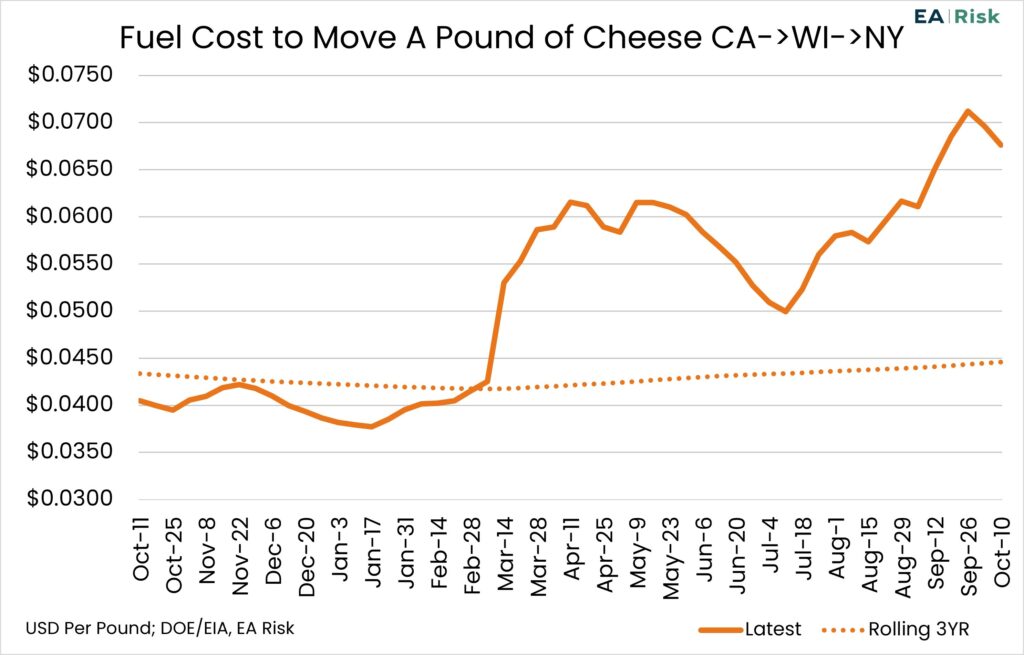
Quick Bites: High Energy Costs Add Cheese Expense
- Strong milk output from U.S. dairy farms and big investments in cheese manufacturing plants have kept cheese inventories well stocked in 2026. As a result, spot cheese block prices at the Chicago Mercantile Exchange have spent most of the year sliding lower.
- This Fall, CME cheese dipped as low as $1.2700 per pound – a price not seen since May 2020. Prices have rebounded since then, but it’s unclear if they’ll be able to remain above the $1.50 mark.
- With prices this low and supplies plentiful, one might expect retailers to pump up their sales on cheese. Store promotions were up 76% year-over-year in September, according to USDA. But the sale prices offered were running 8% higher than last year, even though year-to-date CME spot block prices through September were sitting roughly 25 cents below 2025 levels.
- Just as high gas prices are squeezing consumers’ wallets, expensive diesel is also impacting cheese transportation. Imagine the journey of a pound of cheese that is made in a California manufacturing plant and brought to a Wisconsin cut-and-wrap facility before heading to the East Coast to be sold. With diesel prices up by about $2.50 per gallon compared to last year, it costs an extra $1,300 per truckload to move a pound of cheese from California to Wisconsin to New York. For a 44,000-pound truckload, that equates to an additional 3 cents per pound!
- Higher energy prices are also increasing packaging costs. Cheese packaging relies heavily on polyethylene-based films, and LLDPE resin prices are up by about 53% since the beginning of the year. From wrapped blocks to bags of shredded cheese, it costs more to package these goods. In other dairy manufacturing, the polypropylene used to make yogurt cups is up by about 65%.
- The additional costs in packaging and transportation underscore the fact that low prices at the CME do not automatically translate to inexpensive cheese in the dairy aisle. With these transportation and packaging adding costs for manufacturers, retailers may not be able to offer big deals as we head into the holiday season.
Today’s Special
- Protein is popping up just about everywhere. From milk and yogurt to cereal, chips and even water, manufacturers are putting protein front and center on packaging. Consumer intelligence company NIQ counted more than 37,000 products now carry front-of-package protein claims. That was up 3% from last year and +34% compared to five years ago.
- And consumers want those products. Americans spent roughly $90 billion on products carrying protein claims over the past year. This included more than $2 billion on protein-enhanced pizzas and $35 million on toaster pastries with added protein.
- Dairy is seeing the power of protein labeling firsthand. NIQ reported that sales of milk with protein claims grew by more than 12% year-over-year in the 52 weeks ending August 29. That compared to 3% growth for the milk category overall.
- And the protein craze reaches all the way back to the cheese vat. Growing demand for whey in protein powders, bars and beverages has supported higher ingredient values and encouraged additional processing investment.
- Beef demand has also remained resilient despite record-high retail prices. Calculations by the Federal Reserve Bank of Kansas project U.S. beef consumption in 2026 to be 8% above its 20-year average. Consumers’ continued appetite for beef suggests preferred protein sources remain a priority, even with tighter grocery budgets.
- Americans are on a protein kick, whether they need more or not. A focus on fitness, healthy aging and weight management, along with growing use of GLP-1 medications, is helping fuel the trend. Nearly 90% of Americans already consume adequate protein, USDA analysis shows, but consumers still want more.