
Read the latest issue of Dairy Market Drivers, a bi-weekly report from IDFA partner Ever.Ag. Dairy Market Drivers features spotlight data, key policy updates, and a one-minute video that covers timely topics for the dairy industry.
Dairy Market Drivers: Consumer Credit Situation; Surging Diesel Prices; and Global Milk in a Minute!
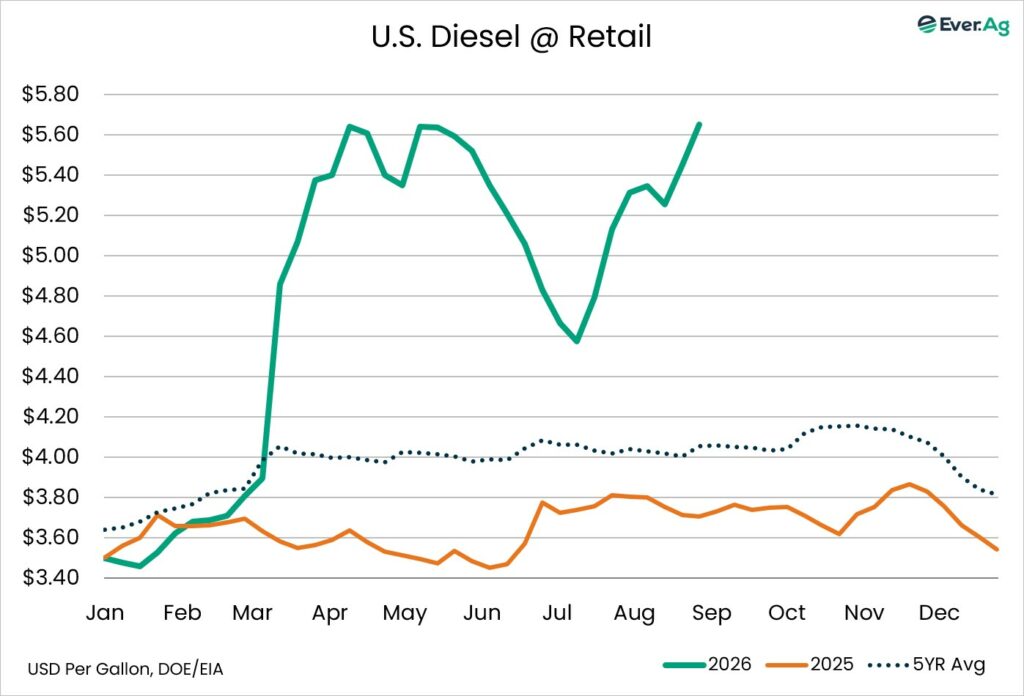
Quick Bites: Surging Diesel Prices Hit Hard
- Diesel prices are soaring as geopolitical conflict continues. Last week, diesel averaged $5.65 per gallon, $1.94 more than a year ago and quickly approaching the all-time high of $5.82 per gallon set in June 2022.
- Diesel inventories have dropped to their lowest levels since 1982. EIA data shows distillate fuel oil stocks – diesel and heating oil – reached 103.4 million barrels for the week ending August 21, a record low for this time of year.
- Ukraine’s attacks on Russian oil refineries disrupted production in one of the world’s largest diesel exporting countries. One in nine barrels of diesel produced globally comes from Russia, according to GasBuddy’s Executive Director Patrick De Haan. Limited traffic through the Strait of Hormuz during the Iran war also interrupted shipments from Gulf producers.
- Diesel is the main fuel used in trucks that transport food, household products and industrial goods across America. FreightPlus Market Intelligence estimates that current fuel surcharges cost roughly $150 more per 600-mile load than they did before the Strait of Hormuz blockade. When fuel prices rise, transportation companies look for ways to recoup those costs. Fuel surcharges and higher shipping rates for retailers and restaurants often make their way to consumers through higher prices for goods.
- Sky-high diesel prices are also hitting farmers at the worst time possible with harvest and fall fieldwork just around the corner. It’s not unusual for diesel prices to rise this time of year anyway as people start to fill home heating oil tanks before Winter. But this year’s geopolitical tensions are adding even greater expense to the crop season, and these elevated prices may carry over to fertilizer prices for next spring.
- Americans have been dealing with higher prices at the gas pump most of this year. Near-record diesel prices stand to raise the cost of many other products, too.
Today’s Special
- Consumers carried more debt in the second quarter of this year. Credit card balances rose to $1.263 trillion, up 0.9% from the first quarter and 4.5% higher year-over-year. This total credit card debt for the quarter was the second highest on record.
- Total household debt nudged slightly lower in the second quarter to $18.771 trillion. That compared to $18.79 trillion in Q1, according to the New York Fed. In addition, the share of credit card balances at least 90 days overdue held nearly steady between Q1 and Q2, even though consumers have been fighting higher prices.
- The current debt situation does not generally cause immediate concern. However, Americans do appear to be spending more cautiously. Both Dollar General and The Dollar Tree posted strong Q2 results as household budgets remain under pressure, driving consumers to prioritize value. Both discountstores posted U.S. comparable sales growth of 3% for the recent quarter. They have continued to attract shoppers looking for value, including lower-priced groceries and everyday necessities. Dollar General said higher fuel costs are contributing to consumers making fewer trips and shopping closer to home.
- Meanwhile, Walmart posted Q2 same-store sales growth at 2.6% – its smallest quarterly growth in six years and down from +4.1% in the first quarter. The company pointed to more cautious consumer spending despite relatively healthy household balance sheets.
- Stores like Walmart, Dollar General and Dollar Tree are doing well because consumers are looking for good deals. Consumers seem to be spending, but with higher gas prices, they may not be spending as freely as they once did. Discount retailers are reporting greater demand for lower-priced groceries and pantry staples, particularly among lower-income households.