
Read the latest issue of Dairy Market Drivers, a bi-weekly report from IDFA partner EA Risk. Dairy Market Drivers features spotlight data, key policy updates, and a one-minute video that covers timely topics for the dairy industry.
Dairy Market Drivers: Consumer Food Spending; Dairy Volume Sales at Retail; and Halloween Spending in a Minute!
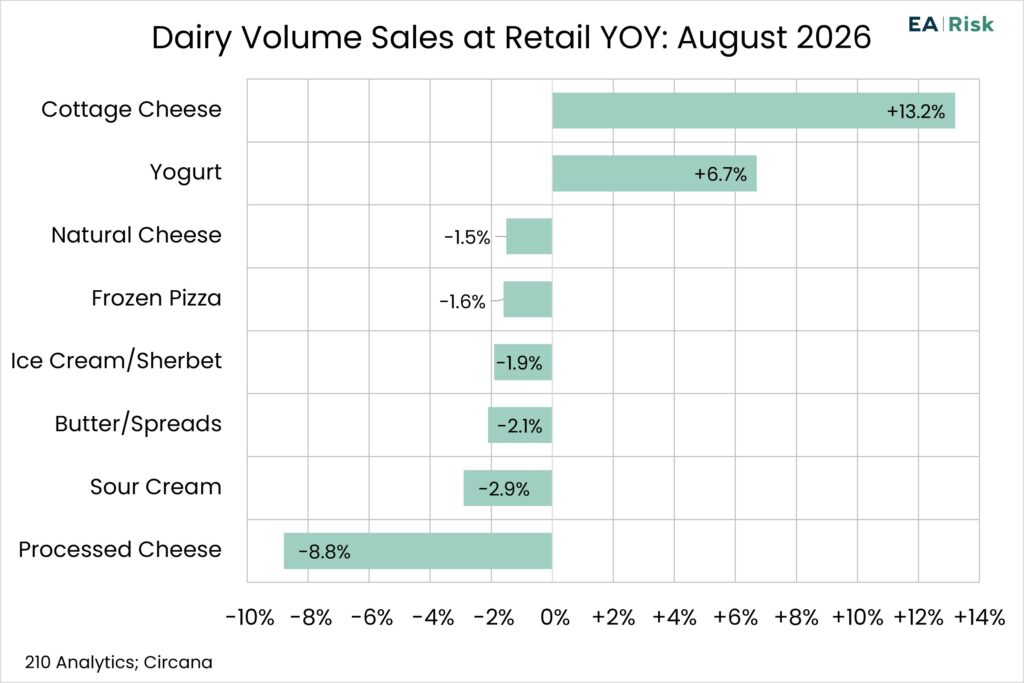
Quick Bites: Cottage Cheese Led Volume Sales
- Consumers’ appetite for protein is fueling growth across the dairy case. According to Anne-Marie Roerink of 210 Analytics, Circana’s August dairy retail sales volume data revealed a protein-packed leader: cottage cheese.
- Cottage cheese volume sales at retail were up 13.2% year-over-year in August. The category’s comeback has accelerated as people look for protein-dense options. Growing demand is reflected in growing production, with cottage cheese output running 10.1% higher year-to-date through July.
- The other winning category was yogurt, with volume sales climbing 6.7% from last August. The nutritional benefits of yogurt sit well with health-focused consumers, including the nearly 11% of American adults taking GLP-1 medications for weight loss. According to a Gallup poll, that’s up from 8% of Americans a year ago and 3% in 2024.
- Other dairy products did not fare as well in August. Natural cheese sales were down 1.5% year-over-year, and processed cheese slid 8.8%. Frozen pizza, a big vehicle for cheese, saw retail volume sales slip 1.6% from 2025.
- Health-focused consumers also reached for fewer frozen dairy treats. Ice cream volume sales were down 1.6% in August during a time of year when one would expect ice cream sales to flourish.
- Overall, August was a rough month for grocery sales. Consumer confidence fell as both food prices and gas prices climbed, and total food and beverage unit sales declined 2.1% year-over-year during the five weeks ending August 30.
Today’s Special
- Amid a sea of rising prices, consumers are looking for value. A Numerator consumer survey showed that in August, nearly 40% of shoppers are buying items when they are on sale. The number of people who said they shop for items on deal was slightly lower than last year, but sale shopping was still the top way consumers are trying to save.
- To save on food spending, about 35% of survey participants said they are doing more cooking at home. A similar number of people are using coupons to reduce costs.
- More than one in five consumers said they are putting more private-label items in their shopping carts. This trend seems even more popular among younger shoppers. According to data firm Spins, Gen Z and Millennials accounted for 81% of year-over-year gains in private-label spending during the 52 weeks ending June 14.
- Average private-brand retail prices have risen at a slower rate than name-brand prices, strengthening their value proposition for cost-conscious grocery shoppers. Store-brand refrigerated meat and seafood saw the largest dollar gain among private brands, up 41%. In comparison, name-brand fresh meat and seafood sales increased by just 11%.
- From sales to coupons to private label items, shoppers are looking for ways to cut costs. Interestingly, though, most money-saving tactics actually decreased a little compared to last year. The change was small but consistent across most categories. It shows that consumers are still looking for value. But many likely already made adjustments following several years of inflation. So maybe, they’ve cut back on most of the ways they can or are willing to.