
Read the latest issue of Dairy Market Drivers, a bi-weekly report from IDFA partner Ever.Ag. Dairy Market Drivers features spotlight data, key policy updates, and a one-minute video that covers timely topics for the dairy industry.
Dairy Market Drivers: Quick Service Restaurant Update; Snacking Habits Among American Consumers; and Cheese Markets in a Minute!
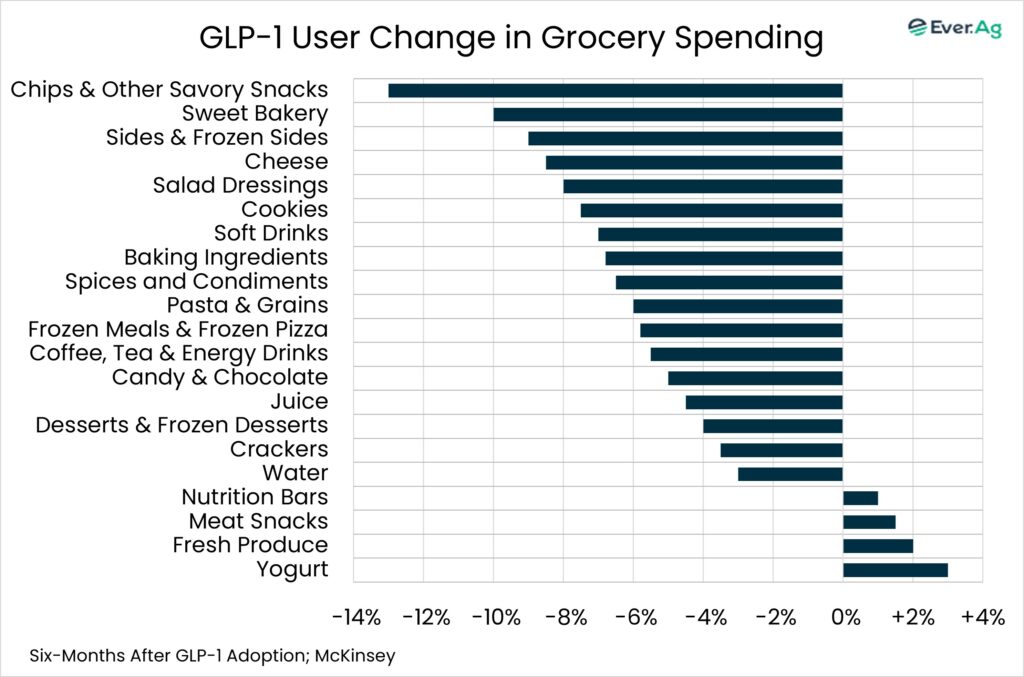
Quick Bites: GLP-1s Shake-Up Grocery Spending
- Many Americans are cutting back on their caloric intake – especially the growing number of adults who are taking a GLP-1 weight loss medication. A Numerator report showed that 22% of U.S. households now have at least one member on a GLP-1 medication, double the number from October 2023.
- Six months after starting the medications, consumers report spending less at the grocery store across most food categories. Chips and other savory snacks topped the list, according to a report by consulting firm McKinsey, with GLP-1 users spending 13% less on this category.
- Other surveys confirm this change in snacking habits. One published by PWC showed that 56% of people on weight loss medications are buying fewer salty snacks, and 6% aren’t buying them at all. This includes popular snacks in which cheese is a key ingredient.
- Cheese, unfortunately, is one of those foods GLP-1 users are buying less of. The cheese category was fourth on the McKinsey list, with spending down 8.5%, following just chips, sweet bakery and sides and frozen sides. Frozen meals and frozen pizza sales were also down nearly 6% among GLP-1 users, cutting into another vehicle for dairy. Ice cream and other frozen desserts lost ground as well.
- Some dairy products found themselves in grocery carts more frequently, though. Yogurt spending was up roughly 3%, making it one of only a handful of categories to see growth. There are also reports of cottage cheese’s growing popularity due to its value as a protein source.
- Speaking of protein, consumers still seem willing to pay for it. Circana data showed ready-to-drink protein product volumes at retail were up about 12% year-over-year, despite double-digit price increases in the 52 weeks ending April 19, 2026. Ready-to-mix products also remained higher year-over-year, continuing a stretch of positive volume growth across both protein categories shown in the data. Whether on a GLP-1 medication or not, many Americans are seeking out protein, which is good for some dairy product categories.
- Shoppers may be cutting back on traditional snacks and some dairy purchases. But continued growth in protein products suggests nutrition-focused options can still be winners in the grocery cart.
Today’s Special
- Elevated gas prices and rising prices in general are keeping Americans from dining out as often as they used to. Quick-service restaurant foot traffic has fallen below year-ago levels every week since late April, according to data from Placer.ai.
- Both burger and pizza restaurants are important vehicles for cheese utilization. And both restaurant categories have been struggling, though some chains fared better than others in their second quarter performance.
- For McDonald’s, the leading burger chain, the second quarter was a disappointing one. U.S. same-store sales were up just 0.8% despite a heavy emphasis on advertising and price promotion. Early third quarter performance didn’t look much rosier, with Placer.ai reporting same-store visits down 6% year-over-year in July. Foot traffic for the major burger chains as a group was down 2% year-over-year in July, which was not good but better than the -6% reported in June.
- It was a good time period for Burger King, with same-store sales up 8.5% for its second quarter. That performance was enough to lift Burger King into second place over Wendy’s for burger chain system-wide sales.
- Pizza chains mostly struggled in Q2, though more recent performance data may be a bright spot. Domino’s eked out same-store sales growth at 0.1% year-over-year. But Papa John’s was down 8.3%, and Pizza Hut saw a dip of -5.0% in same-store sales. However, foot traffic at the top seven pizza chains was up 2.8% in July, which was an improvement from June’s +1.2%.
- While overall restaurant performance has been negative to neutral, a few chains are still winning over consumers. Starbucks is one of them, with the help of dairy. U.S. same-store sales rose by 7.1% year-over-year in Q2, surpassing expectations. The company’s CFO pointed to menu additions that are drawing in customers and specifically mentioned the increasing popularity of protein cold foam.
- This demand for protein in the form of beef is also keeping Texas Roadhouse on a winning streak. The steakhouse chain reported another positive quarter, with same-store sales up 6.2% year-over-year and 3% traffic growth. Even though high beef prices impact the chain’s bottom line, their ability to improve operations while maintaining value for customers seems to be fueling current success.