
Read the latest issue of Dairy Market Drivers, a bi-weekly report from IDFA partner Ever.Ag. Dairy Market Drivers features spotlight data, key policy updates, and a one-minute video that covers timely topics for the dairy industry.
Dairy Market Drivers: Restaurant Traffic Update; Nonfat Dry Milk Prices on the Rise; and Grilling Season in a Minute!
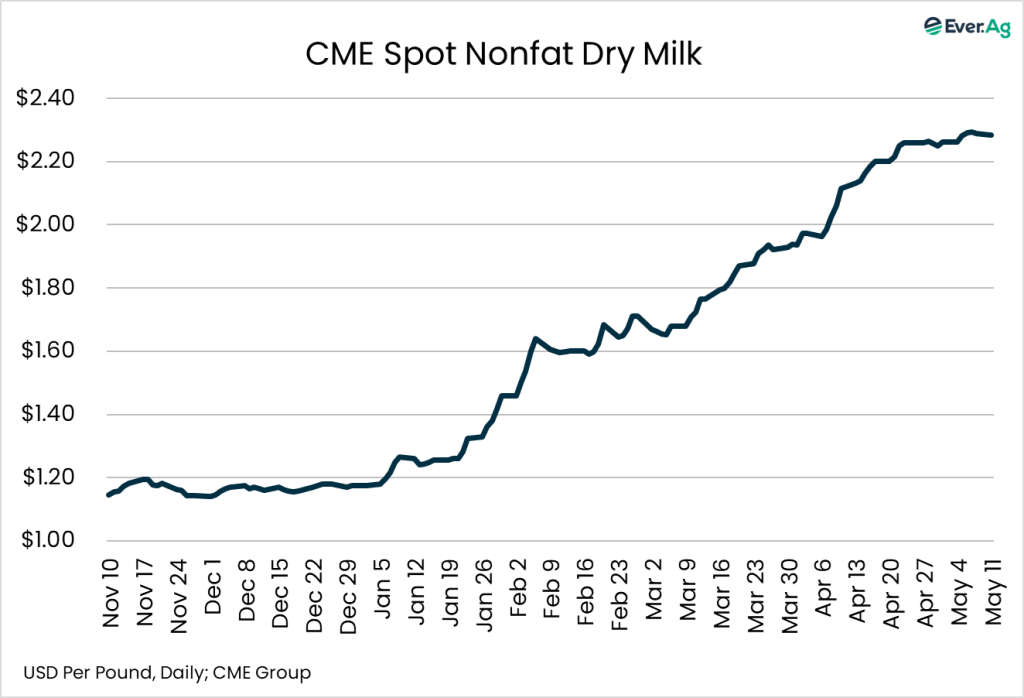
Quick Bites: Nonfat Dry Milk Keeps Climbing
- Nonfat dry milk continues to defy gravity as current prices have hit new record highs at the Chicago Mercantile Exchange almost daily for the past month. CME nonfat dry milk is currently in the upper $2.20s per pound while NDPSR values are climbing above $2.00.
- Nonfat dry milk’s climb has been the surprise among dairy markets so far in 2026. Current pricing is up more than a dollar per pound since the start of the year and more than a dollar higher than the five-year average.
- Tight supply is causing prices to soar. New and expanded plants are pulling milk away from powder dryers. However, recent data suggests that production of NDM and SMP combined is starting to pick up.
- Slim inventory is a U.S. issue, not a global one. With surging milk production in Europe, skim powder production has been on the rise. New Zealand also has plenty of milk and ample powder supplies. As such, the U.S. nonfat dry milk price sits at more than a 70-cent premium over those global competitors.
- If prices remain this elevated, global buyers may look beyond the U.S. to less expensive sources. In March, nonfat dry milk and skim milk powder exports were down 8% year-over-year.
- Will nonfat dry milk continue its meteoric rise? Greater production in the second half of 2026 would bolster supply, while lost exports would pressure prices lower. Though we don’t know when the shoe will fall, it does appear that nonfat dry milk is destined to come down – but it may not be for a while yet.
Today’s Special
- Consumer sentiment is low, and Americans appear to be pulling back their spending in various areas, including dining out. Recent restaurant foot traffic has been soft, falling behind last year’s pace for the past few weeks.
- But some restaurants performed better than others in early 2026. Many fast-food chains released first quarter performance data in the past month, and it revealed some winners among the group.
- McDonald’s Q1 same-store sales climbed more than expected, up 3.8% year-over-year, with revenue up 9%. Limited-time offers and new value menu items helped bring diners in the door in early 2026, but McDonald’s CEO Chris Kempczinski warned that consumer spending may be “getting a little bit worse” as inflation and higher fuel costs continue squeezing lower-income households.
- Burger King’s performance also surpassed expectations, posting a 5.8% increase in same-store sales, as meal deals helped bring in consumers. The chain also reformulated its classic Whopper and made updates to its packaging and has been investing big dollars to elevate its brand and physical locations.
- Restaurants in general are a major vehicle for moving dairy products like cheese, especially pizza chains. And pizza chains also showed so-so performance in the first quarter. Domino’s U.S. same-store sales rose just 0.9%, below expectations, and Pizza Hut reported same-store sales down 4.0% year-over-year, logging 10 consecutive quarters of sales below prior-year levels. Papa Johns’ North America same-store sales fell 6.4%. Pizza chains are working hard to offer promotions, but consumers are being choosier about where they break out their wallets.
- While consumers search for value in general, there are some conveniences they still seem willing to pay for. Starbucks’ U.S. same-store sales jumped 7% in the first quarter, with the company reporting continued traffic from guests of all ages and income levels. However, Starbucks did close hundreds of underperforming stores in the U.S., Canada and Europe last year.
- Restaurant operators enter the Summer months with a watchful eye on gas prices. First quarter performance results only included one month of elevated gas prices caused by the Iran war. If gas continues to be a big expense for consumers, that may leave fewer discretionary dollars to spend dining out, even at value-focused chains.