
Many Americans recognize dairy as a cornerstone of a healthy diet but continue to fall short of recommended daily intake as endorsed by the Dietary Guidelines for Americans. In fact, 88% of Americans over the age of 1 are under-consuming dairy. This page explores barriers to dairy nutrition among Americans and how to remove them. Using information from new in-depth consumer survey released by the International Food Information Council (IFIC) drawing on the beliefs, behaviors, and perceptions of Black, Latino, Asian/Pacific Islander, and NonHispanic White consumers, we offer recommendations for collaboration, education, and policy solutions. IDFA’s messages highlight the top factors driving dairy purchasing decisions, explore the prevalence of lactose-free dairy options, address misconceptions about dairy, and offer policy recommendations to help more Americans access dairy nutrition that is appropriate for them and their families.
Jump to:
- Key Messages
- Milk and Dairy Are the Best Nutritional Bang for Your Buck Infographic
- Downloadable Social Media Graphics
Key Messages
- According to the Dietary Guidelines Advisory Committee report, 88% of Americans over the age of 1 are under-consuming dairy. Whether it’s yogurt, milk, cheese, or lactose-free options, nearly all people would benefit from dairy’s 13 essential nutrients, including high-quality protein, calcium, vitamin D, and potassium, as well as better bone health and lower risk for type 2 diabetes and cardiovascular disease.
Nutrition & Health Are Top Drivers for Dairy Consumption
- New research shows that nearly 8 in 10 Americans from all backgrounds (78%) believe dairy is an essential part of a healthy and balanced diet.
- Dairy products like milk and yogurt contain 13 essential nutrients including high quality protein, calcium, vitamin D, and potassium, and health benefits including better bone health and lower risk for type 2 diabetes and cardiovascular disease.
- Most people are aware of the health benefits associated with dairy consumption, especially better bone health (90%) and dental health (79%).
- However, many other health benefits of dairy consumption are less well known and require education by government and medical professionals, including the promotion of a healthy immune system (65%), heart health (54%), and maintaining healthy blood pressure (51%).
- Most people are drawn to dairy because they are actively trying to include protein in their diet (48%).
- Between 39-48% of all Americans who consume yogurt, milk and cheese are drawn to it because it is a good source of protein. Food brands, retailers, diet and nutrition professionals, and policymakers need to raise awareness about dairy being a good source of high-quality protein for all people.
Consumers Love Dairy for Taste & Affordability
- Most people are drawn to dairy because it tastes good and is affordable.
- Consumers overwhelmingly rank taste as the main factor for purchasing cheese, yogurt, and milk, followed by dairy being a good source of protein.
- Cheese is the most frequently consumed dairy product (90% weekly), followed by butter (85%), milk (75%), and yogurt (60%).
- Nearly 2 out of 10 Americans (19%) may avoid dairy because they feel it may spoil too quickly. However, modern dairy products are different thanks to new pasteurization technologies that extend the shelf life of nutritious dairy products. For example, different kinds of milk at the grocery store have a shelf life of 10 to 30 days, while many cheeses can be refrigerated for a month or more.
- Among all food and beverages at retail, dairy remains a good value. Prices for dairy products were 1.3% lower in April 2024 than April 2023, and dairy products are one of three categories predicted to continue to decline in price in 2024.
- In addition to taste and health benefits, nearly 1 in 3 survey respondents are motivated to purchase dairy because they find it affordable. The price of a gallon of milk has reached a two-year low and continues to fall.
The Lactose-Free Dairy Market Is Growing
- The lactose-free market has seen significant growth in recent years, driven by a growing demand for dairy options. As more consumers seek lactose-free alternatives without compromising taste and nutritional value, the market has expanded to include a diverse range of products such as milk, yogurt, cheese, and ice cream.
- For groups that report higher rates of lactose sensitivity, most people say they’ve never consumed lactose-free milk or dairy products.
- In fact, two in three Americans say they’ve never consumed lactose-free milk (64%), lactose-free flavored milk (76%), or other lactose-free dairy products other than milk (68%). The rate of non-consumption is more than half among Latino, Black, and Asian/Pacific Islander communities.
- More SNAP-eligible survey takers (70%) report that they have never consumed lactose-free milk compared with non-SNAP-eligible survey takers (63%).
Nutritional Bang for Your Buck
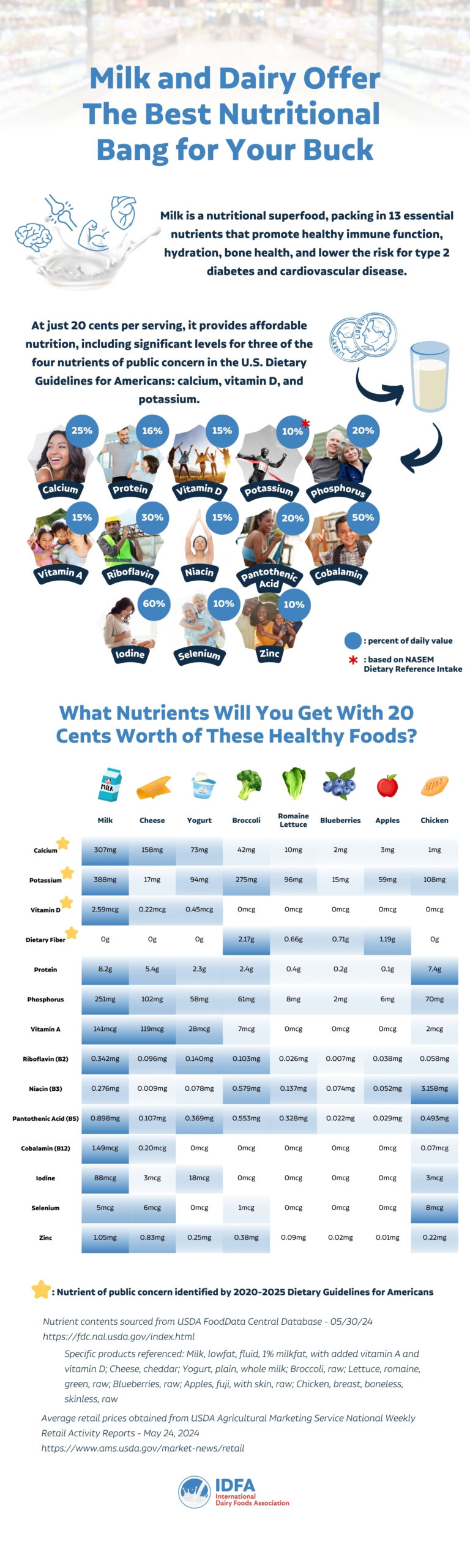
In today’s world, where the cost of living continues to rise, finding affordable yet nutritious food options is paramount, especially for low-income families. A new analysis from the International Dairy Foods Association demonstrates that no other food product provides the same nutritional bang-for-your-buck as do dairy products like milk, cheese, and yogurt. These dairy products not only offer a comprehensive range of vitamins and minerals but also play a crucial role in promoting overall health and combating diet-related chronic diseases—all at an affordable price!
Nutritional Superstars: Milk, Cheese, and Yogurt
Milk is often hailed as a nutritional superfood, and for good reason. A single serving of milk packs 13 essential nutrients, including calcium, vitamin D, and potassium, which are critical for maintaining healthy immune function, hydration, bone health, and reducing the risk of type 2 diabetes and cardiovascular disease. For just 20 cents per serving, milk provides significant levels of three of the four nutrients of public concern in the U.S. Dietary Guidelines for Americans: calcium, vitamin D, and potassium. Many of these nutrients are also present when the milk is converted to cheese and yogurt.
Comparing Nutritional Value Across Foods
When comparing the nutrient content of 20 cents worth of milk, cheese, and yogurt to other nutritious foods like broccoli, romaine lettuce, blueberries, apples, and chicken, dairy products consistently provide higher levels of these essential nutrients.
For example, 20 cents of milk offers more calcium, potassium, and vitamin D compared to these other foods, making it a more affordable and comprehensive source of these nutrients, which make up three of the four dietary components of public health concern as highlighted by the Dietary Guidelines for Americans (DGA).
Affordable Nutrition for Low-Income Families
For low-income Americans, accessing nutritious food that fit within a tight budget can be challenging. Dairy products stand out as cost-effective solutions that do not compromise on nutritional quality. By incorporating milk, cheese, and yogurt—including lactose-free and low-lactose options—into their diets, families can ensure they are meeting their nutritional needs without breaking the bank. This accessibility is crucial for supporting the health and well-being of low-income communities, where diet-related chronic diseases are more prevalent.
Policy Implications: Promoting Dairy for Better Health
Policymakers should consider the significant nutritional benefits and affordability of dairy products when designing programs to combat diet-related chronic diseases and hunger. By promoting the inclusion of milk, cheese, and yogurt in the Dietary Guidelines for Americans and in federal nutrition assistance programs like SNAP and the National School Lunch Program, policymakers can help ensure that all Americans have access to nutritious and affordable food options.
IDFA advocates for the recognition of dairy products as vital components of a healthy diet. Given their nutrient density and cost-effectiveness, dairy products are uniquely positioned to help address public health concerns and improve the nutritional status of Americans across all income levels.
Social Media Graphics
Click on the images below to download a high-resolution version.


